
Selecting the right carpet tile involves far more than choosing a color or pattern. It is a technical decision that shapes a space’s long-term acoustics, underfoot comfort, and lasting durability. Delivering a concept that balances aesthetic vision with functional longevity starts with a precise understanding of technical specifications.
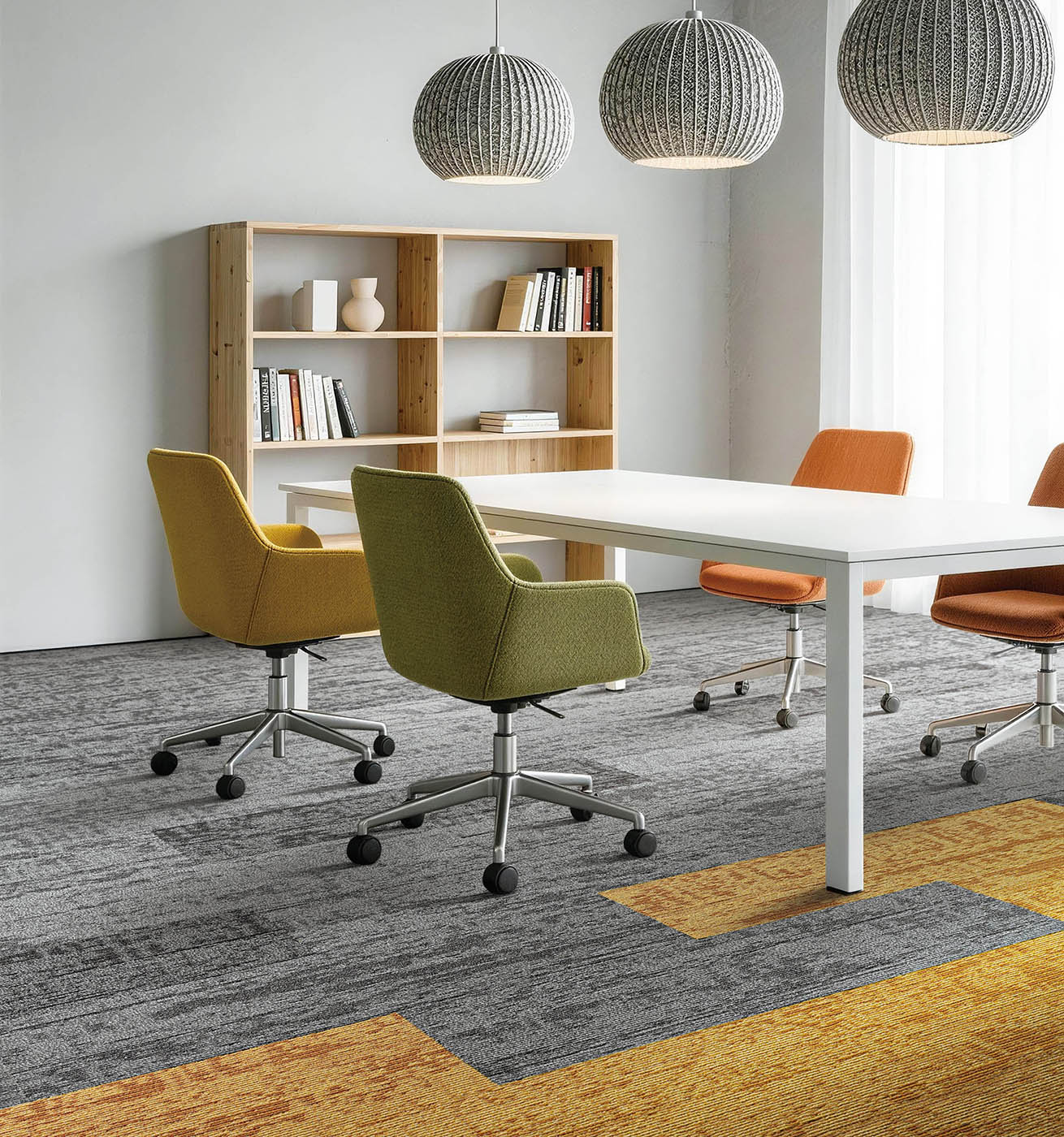
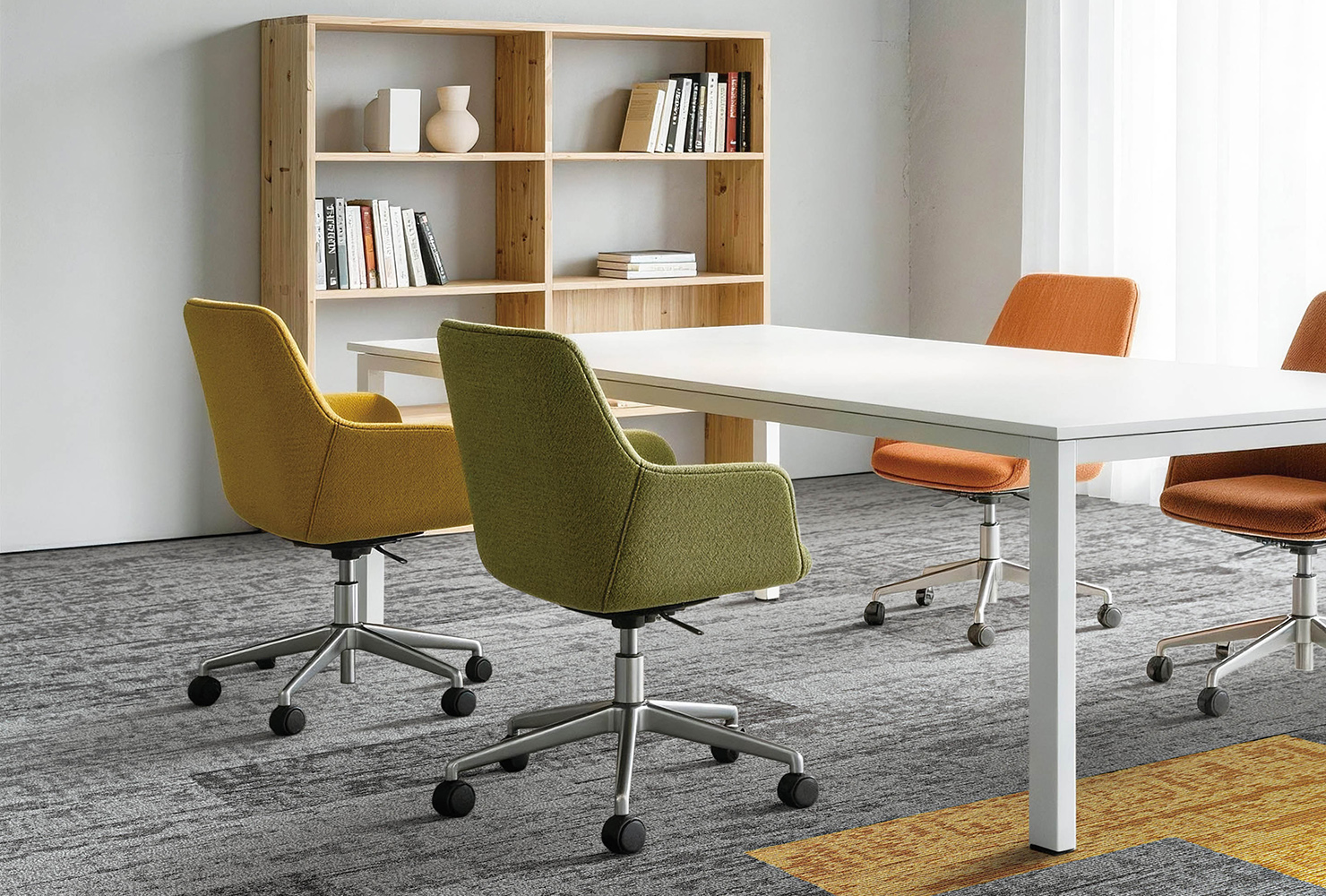
Far more than a decorative feature, modular carpet tile is a versatile architectural material engineered to adapt to diverse interior environments. Misspecifying technical properties—such as choosing a low-density or non-solution-dyed fiber in high-traffic zones—can cause rapid fading, wear, matting, or irreversible staining within months, leading to costly rework and client dissatisfaction.
A well-matched specification delivers:
- Precise Spatial Positioning & Ambiance: Texture, construction, and visual design aligned with a space’s functional and emotional needs.
- Acoustic Well-being: Advanced acoustic performance to cultivate focused, high-performance environments.
- Smooth Installation: Minimized material waste and smooth transitions with other flooring materials.
- Lower Maintenance Costs: Easy to maintain, lowering ongoing cleaning and replacement costs for owners.
- Higher Client Satisfaction:Enduring durability paired with refined aesthetics to bolster designer reputation.
- Greater Long-Term Cost Efficiency:High wear resistance that extends asset lifespan and optimizes TCO
In short, precise product specification is the foundation for balancing aesthetics, functionality, and budget in any successful commercial flooring design.
The First Thing You Need to Focus On Is Materials
Carpet tiles combine varying levels of durability, underfoot comfort, and environmental performance based on their face fibers and backing materials. The face fiber can influence the carpet's visual texture, performance, and overall lifespan.
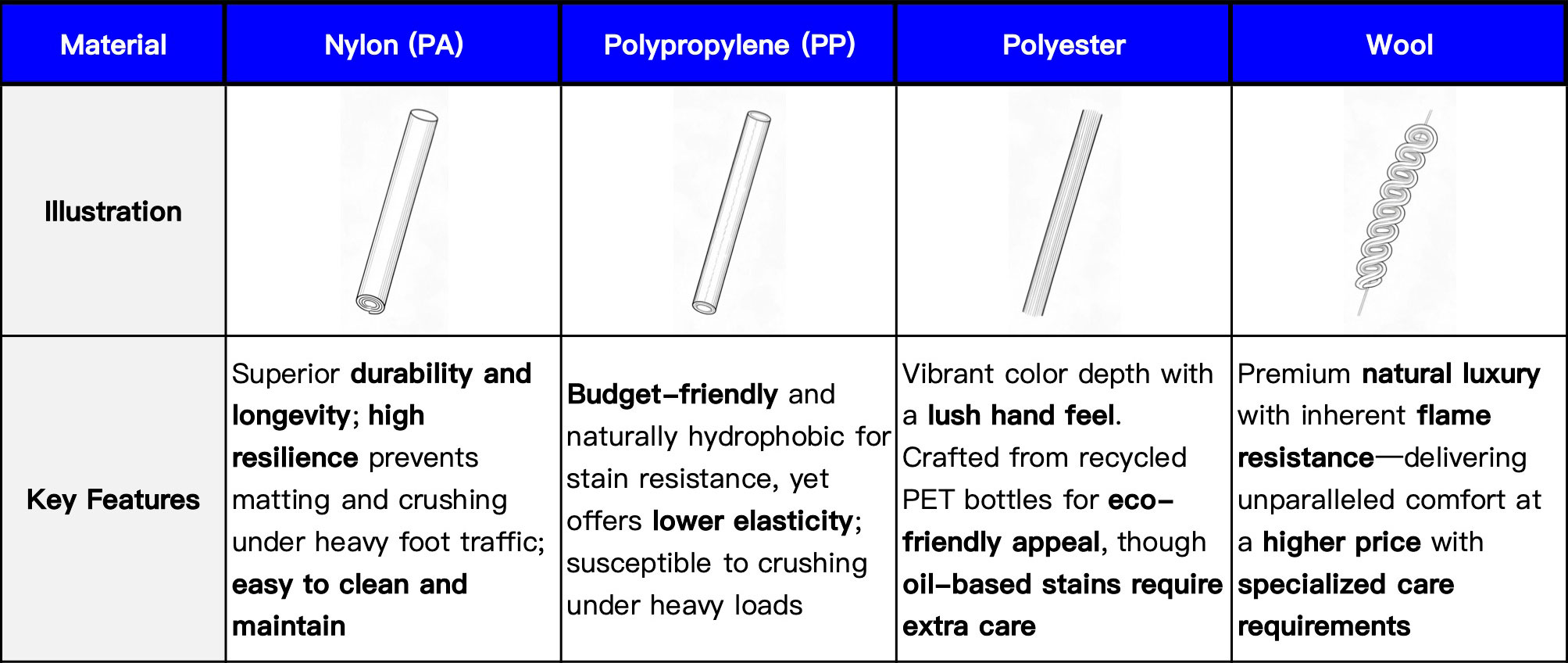
Meanwhile, the backing material drives the carpet tile's dimensional stability, underfoot comfort, and environmental profile.
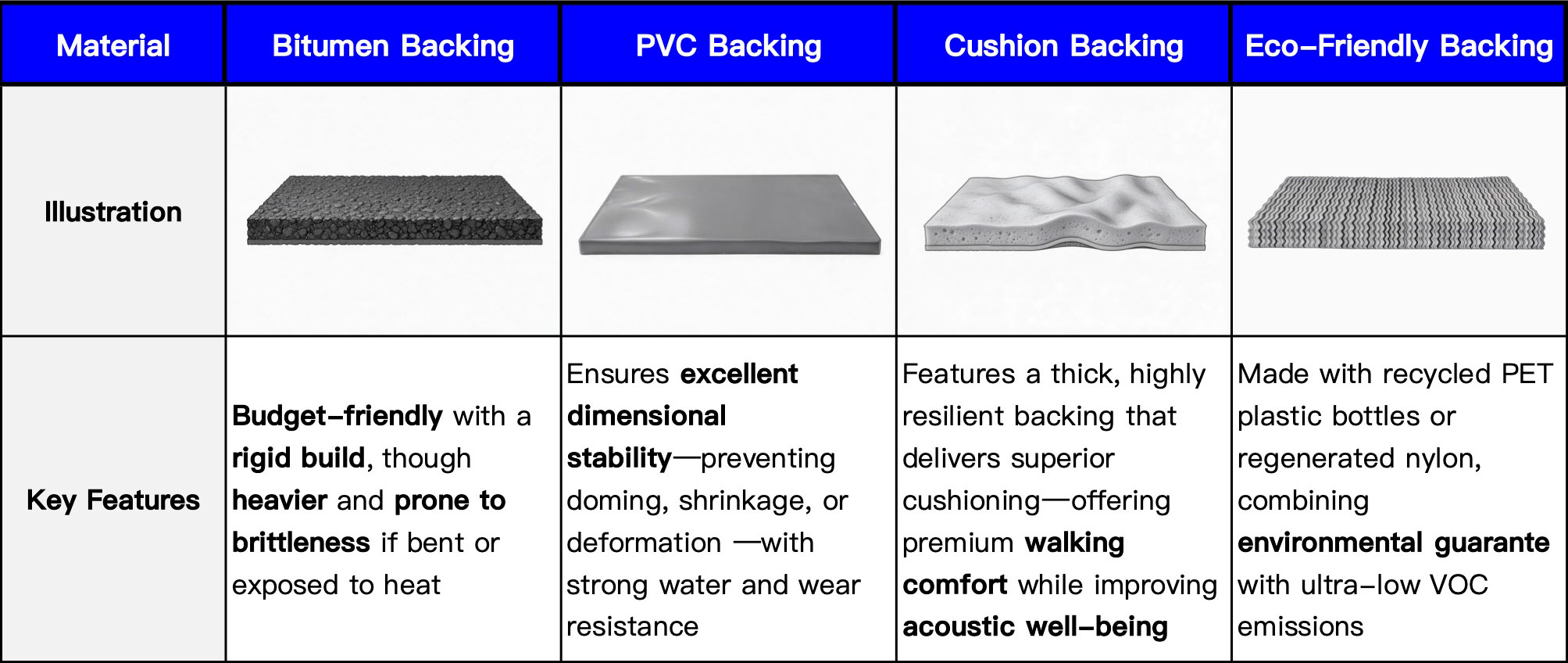
For commercial spaces seeking long-term value, nylon face fiber paired with a PVC backing remains the most proven, widely used workhorse combination. However, for projects targeting green building certifications or strict sustainability standards, upgrading to a sustainable, low-VOC backing achieves an ideal balance between durability and well-being.