
Every morning, as employees and visitors step into the office, the sense of quiet, warmth, and comfort beneath their feet is largely due to the carpet's sound-absorbing properties and soft texture. However, its value goes far beyond comfort—it is also silently safeguarding your respiratory health.
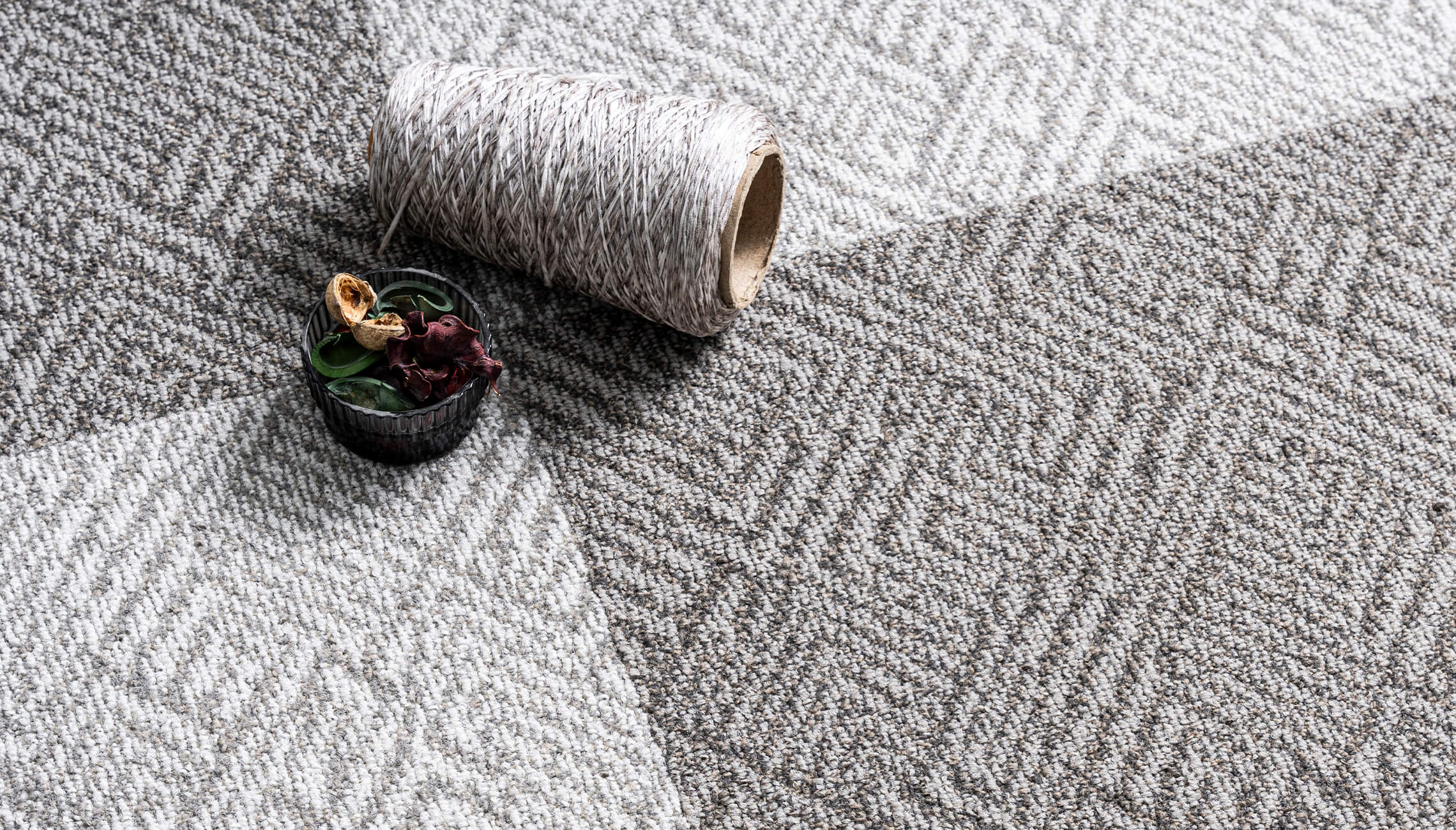
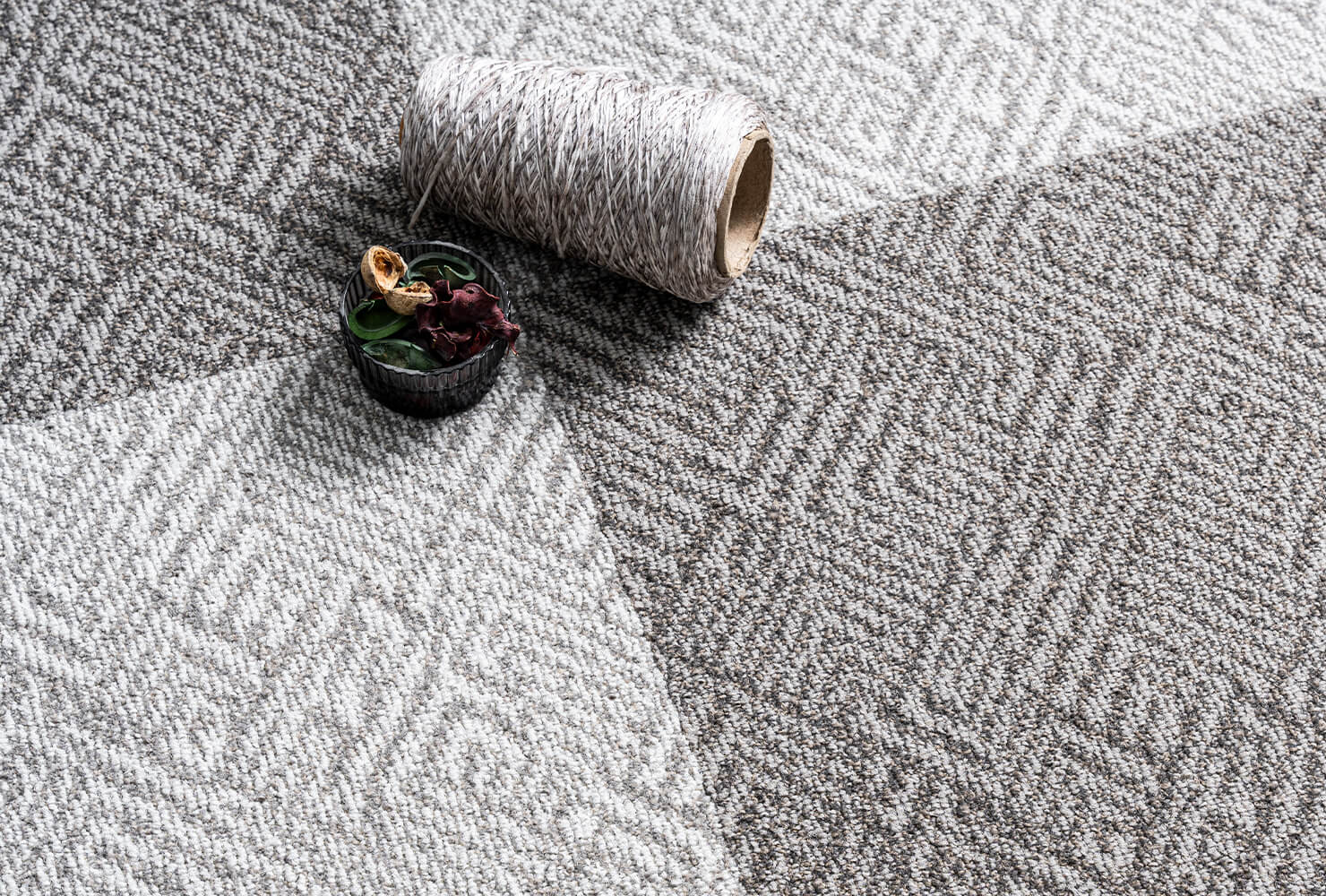
With people now spending 90% of their time indoors, interior air quality has never been more critical, and carpets serve as a powerful ally in fostering a high-quality indoor environment. Research by the Carpet and Rug Institute (CRI) shows that carpets effectively improve indoor air quality by trapping dust, pollen, and other particulate matter with their fibers, keeping them out of the breathing zone.
Of course, this filtering capability requires scientific maintenance to remain effective over time. Proper, routine care not only extends the carpet's lifespan but also consistently maintains a healthy, comfortable space.
Routine Cleaning: Prevention is Better Than Cure
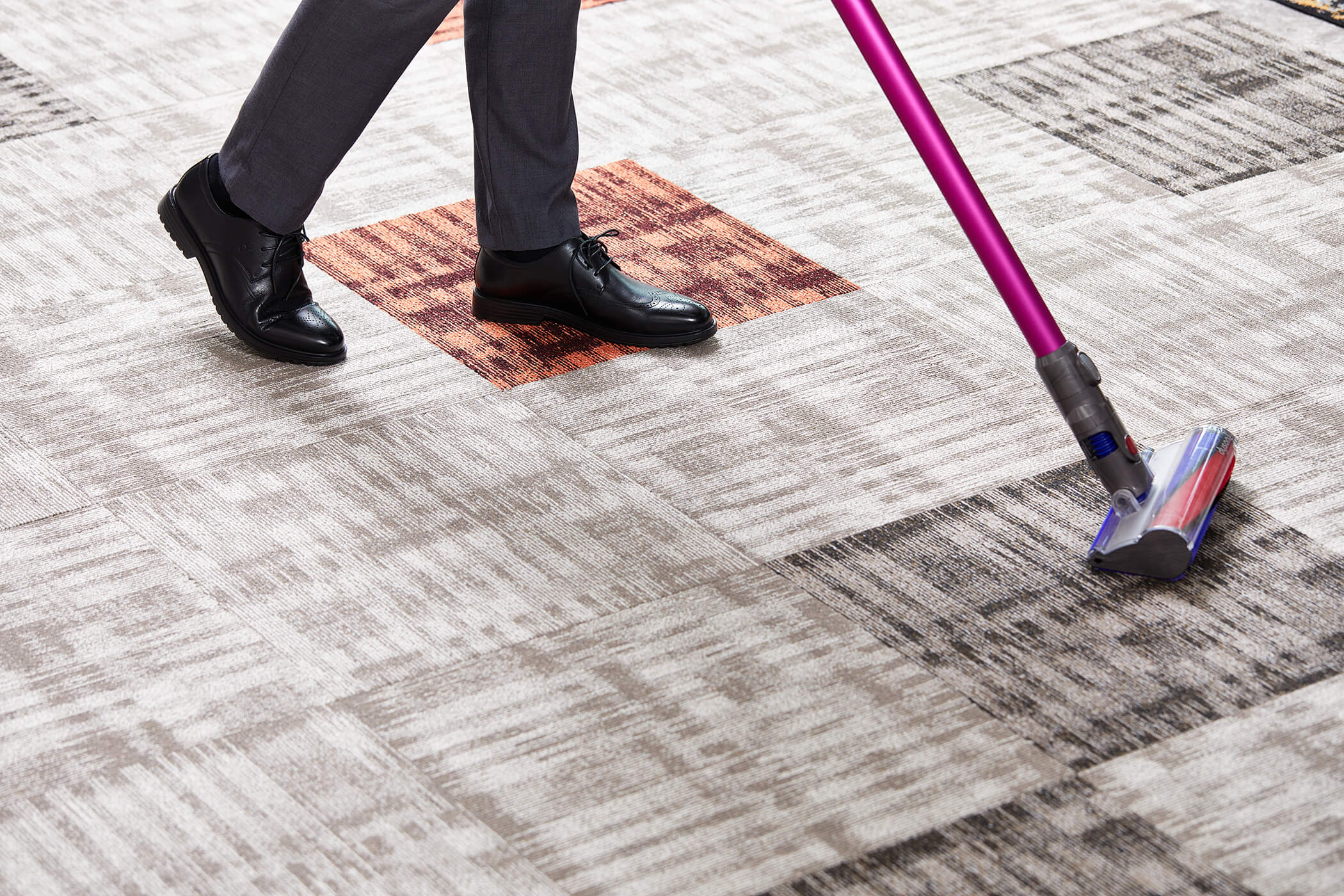
In commercial spaces, the accumulation of dust and dirt through daily use is inevitable. Studies indicate that 74% to 79% of all carpet soil consists of "insoluble dry solids"—such as sand, hair, pollen, and airborne particles. These dry abrasives act like invisible sandpaper, grinding against and damaging the fibers. The CRI points out that regular vacuuming is one of the most effective ways to remove dry soil, capable of eliminating 90% to 95% of it.
To address this, premium carpet manufacturers optimize soil resistance in two dimensions. Some high-end products feature specialized soil-resistant treatments applied during manufacturing. This acts as a protective shield around the fibers, preventing dry dirt from adhering and making daily vacuuming effortless and more thorough.
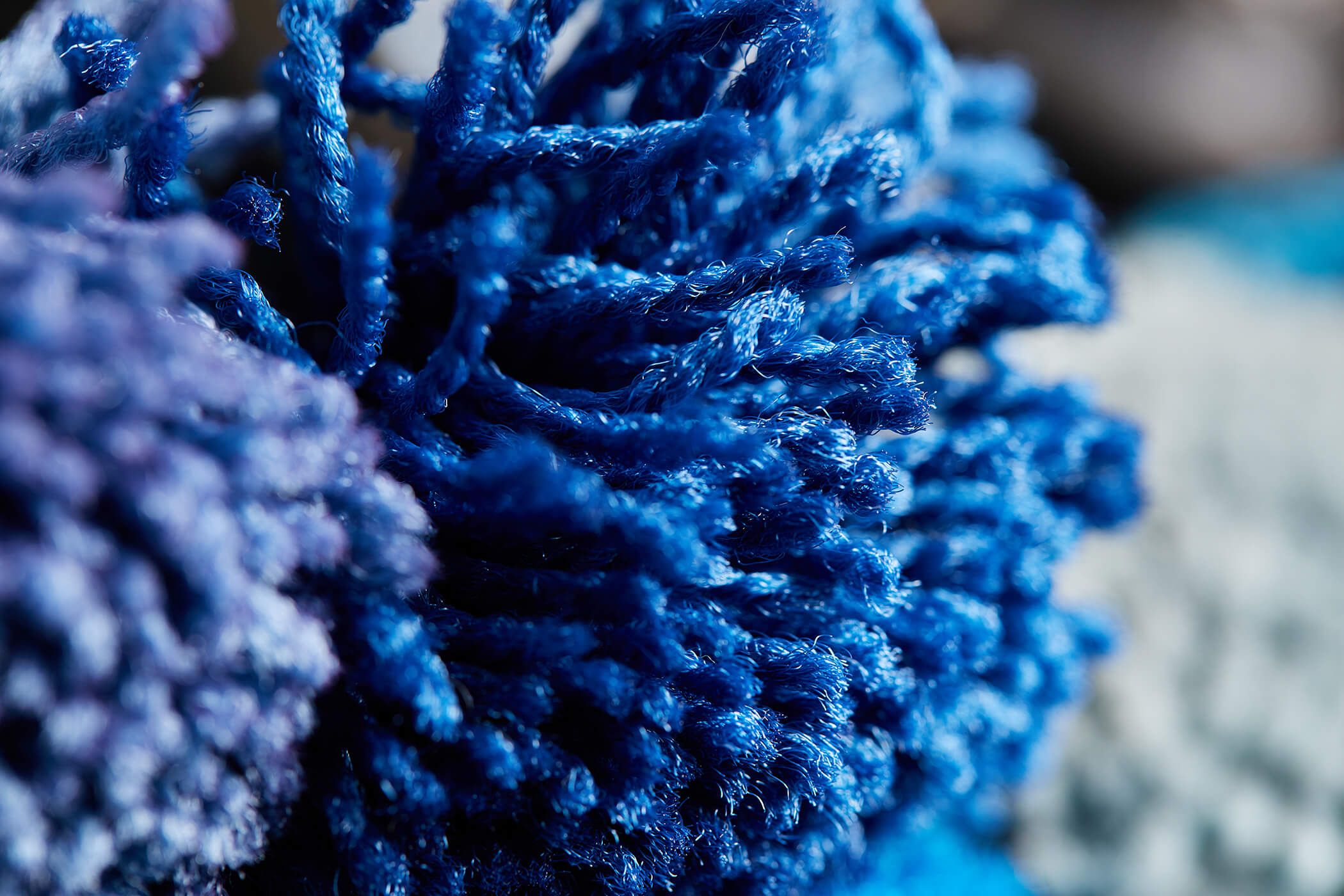
Meanwhile, brands innovate through yarn structure design and chemical modification. For instance, Tuntex’s aircell™ yarn utilizes a triangular hollow structure. When light hits the fiber, it refracts, virtually filtering out the shadows cast by dirt and dust. Any trapped soil can then be easily removed with a standard vacuum cleaner.
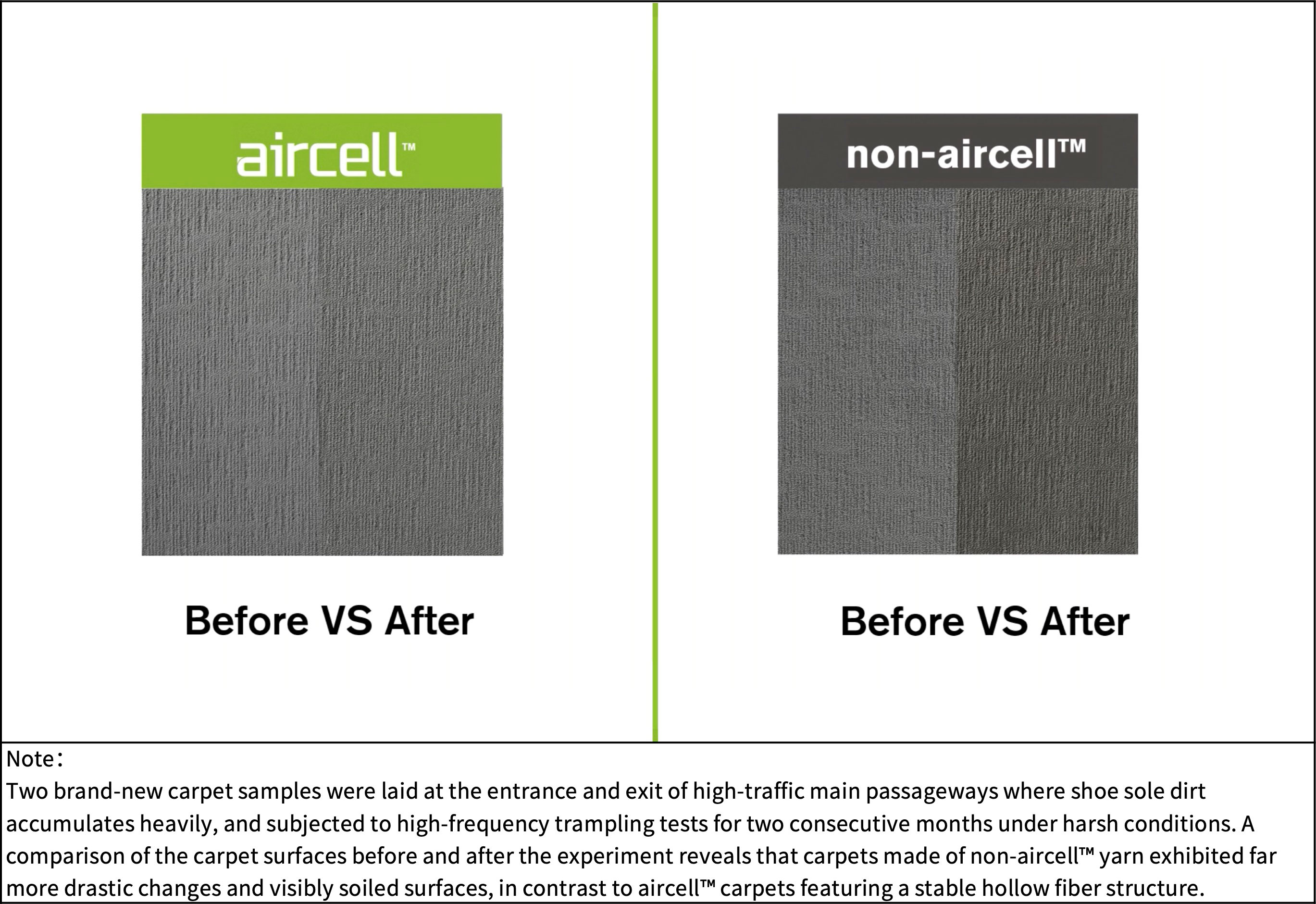
Preventative Care: Studies show that most dry dirt is tracked indoors via footwear. Implementing walk-off mats at main entrances as a preventive measure can drastically reduce outdoor dirt.
Spots and Stains: Immediate Action Prevents Spreading
Liquid spills are a common maintenance headache in commercial offices. Once absorbed deep into the fibers, they can leave stubborn, discolored stains. Today, premium carpets feature advanced stain-resistant technology that causes liquids to bead up temporarily on the surface—much like a lotus leaf effect—buying valuable time for a quick cleanup.
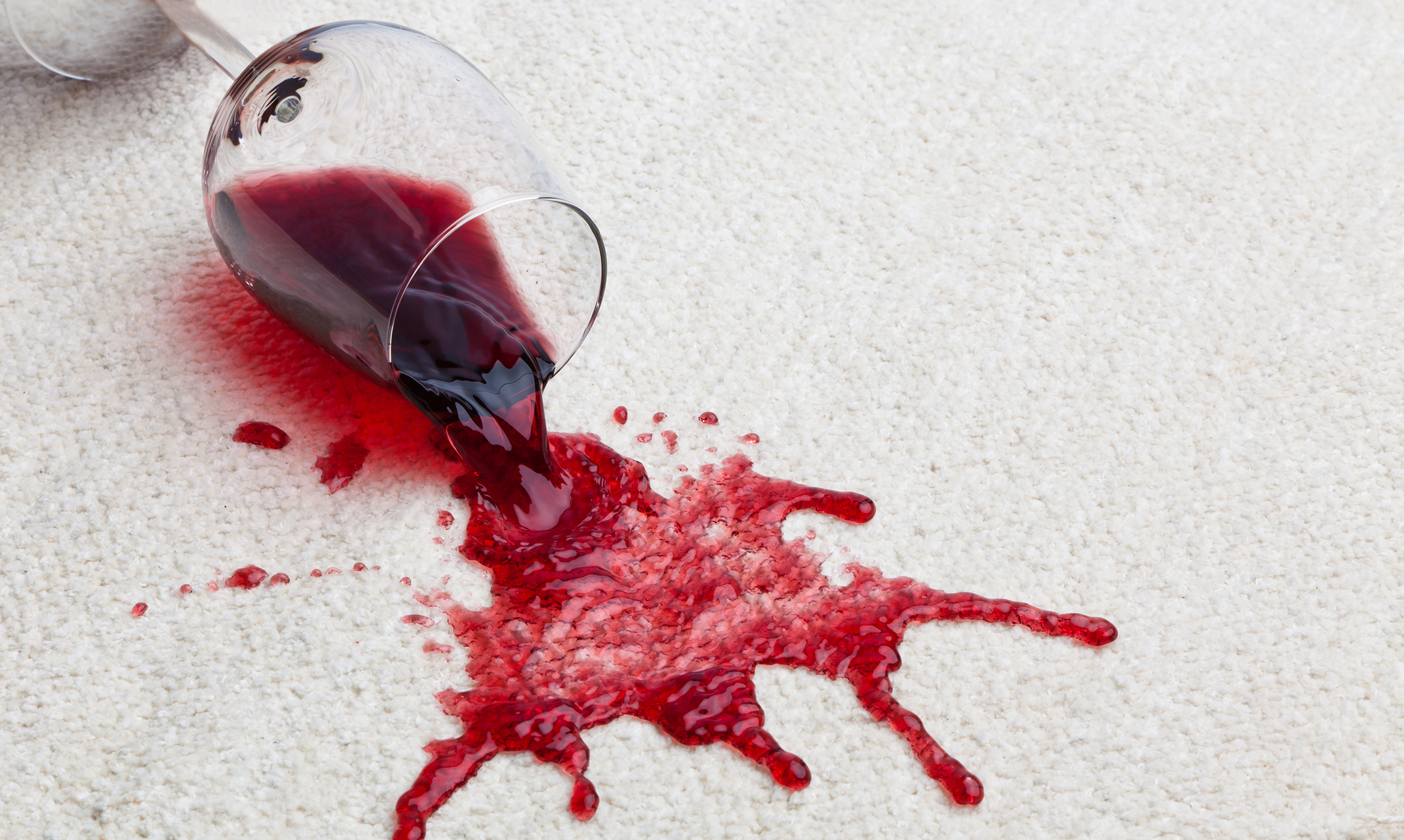
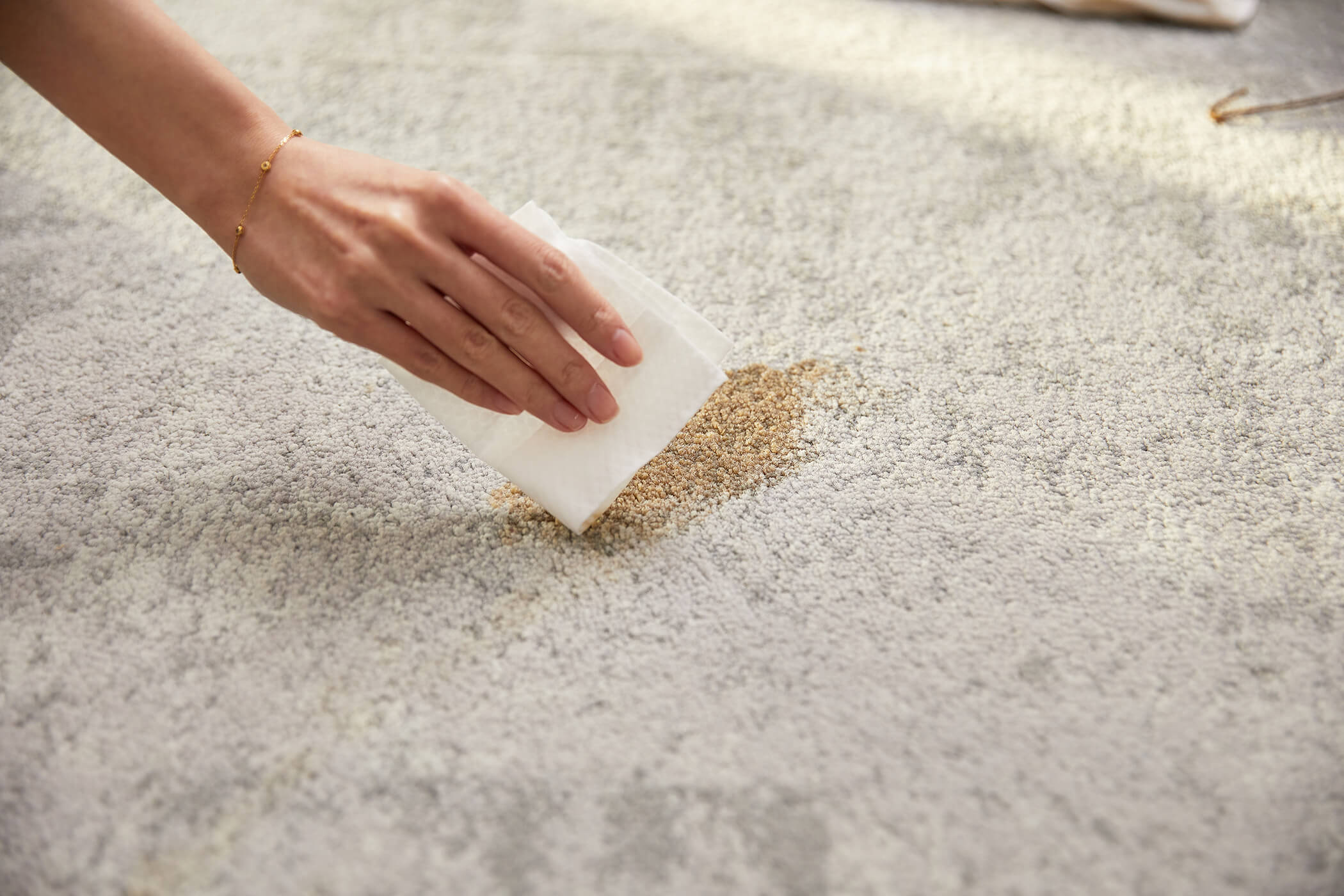
For accidental liquid spills (e.g., coffee, red wine, or ink), take immediate action while the stain is fresh:
- Blot immediately: Place a clean, dry, absorbent white cloth or paper towel over the spill.
- Press vertically: Apply firm, repeated downward pressure to transfer the liquid onto the cloth.
- Never rub: Avoid rubbing or scrubbing the area, as this will spread the spill and distort the carpet's texture.
- Rinse and re-blot: Flush the area with clean water, then blot completely dry to avoid residue-induced resoiling.
The video tutorials can be viewed by clicking on the following image.
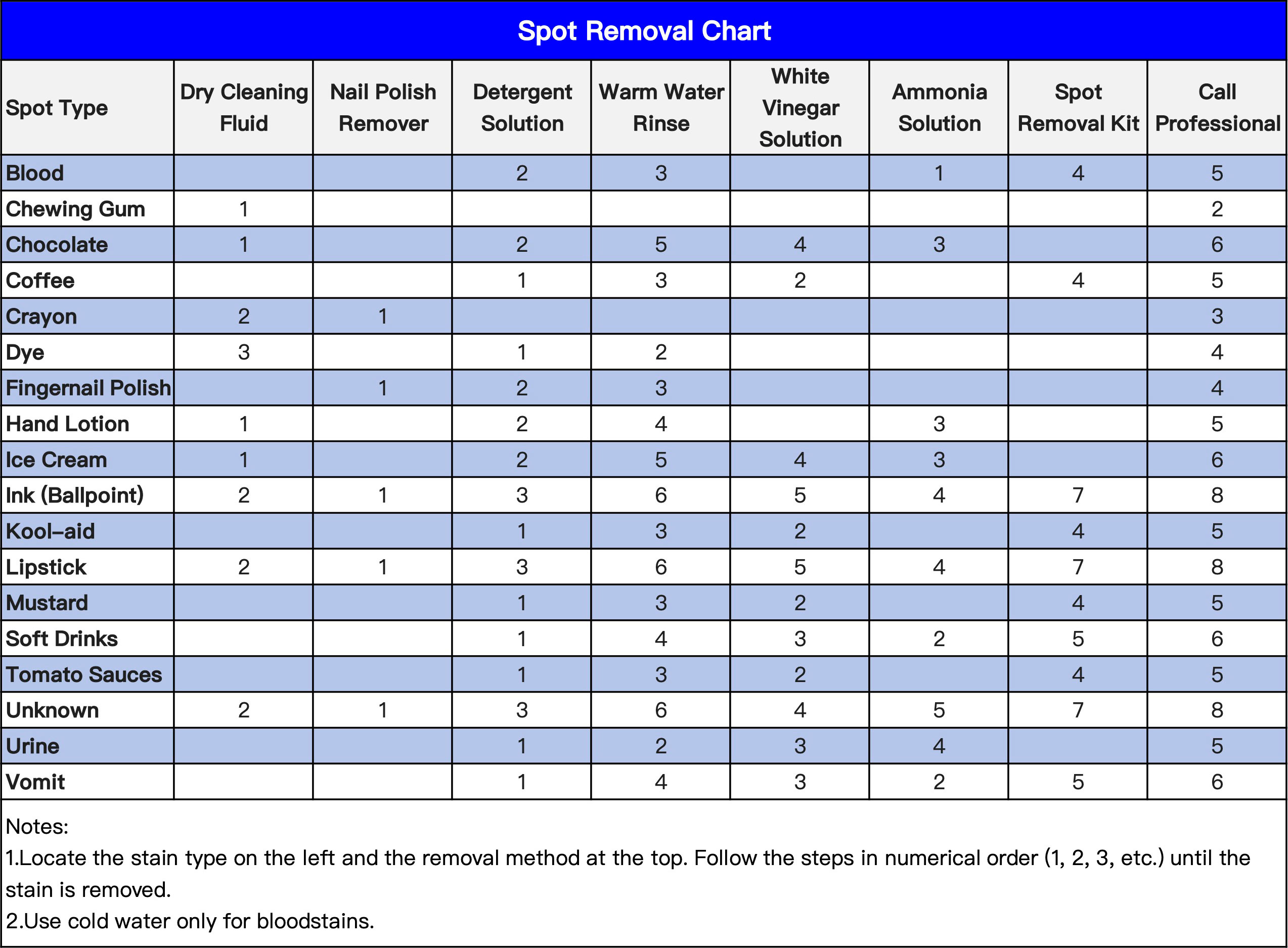
For dried, stubborn, or complex stains, water alone is seldom sufficient. These situations typically require specialized cleaning agents paired with a portable spot extraction machine. For specific stain treatments, please consult the Spot Removal Chart below:
Deep Cleaning: A Long-Term Investment in Health
When invisible particulates reach saturation, periodic deep cleaning becomes essential. The Carpet and Rug Institute (CRI) recommends professional deep cleaning at least once every 12 months to extract deeply embedded soil. Professional cleaners will customize their methods based on fiber type and soil conditions, following a rigorous five-step process: dry soil removal, soil suspension, soil extraction, pile setting (finishing or grooming), and drying. The core objective is to maximize grime removal while minimizing detergent residue.
Reminder: Ensure proper ventilation before, during, and after cleaning to facilitate rapid drying. The CRI strongly emphasizes accelerated drying, as prolonged dampness fosters microbial growth.
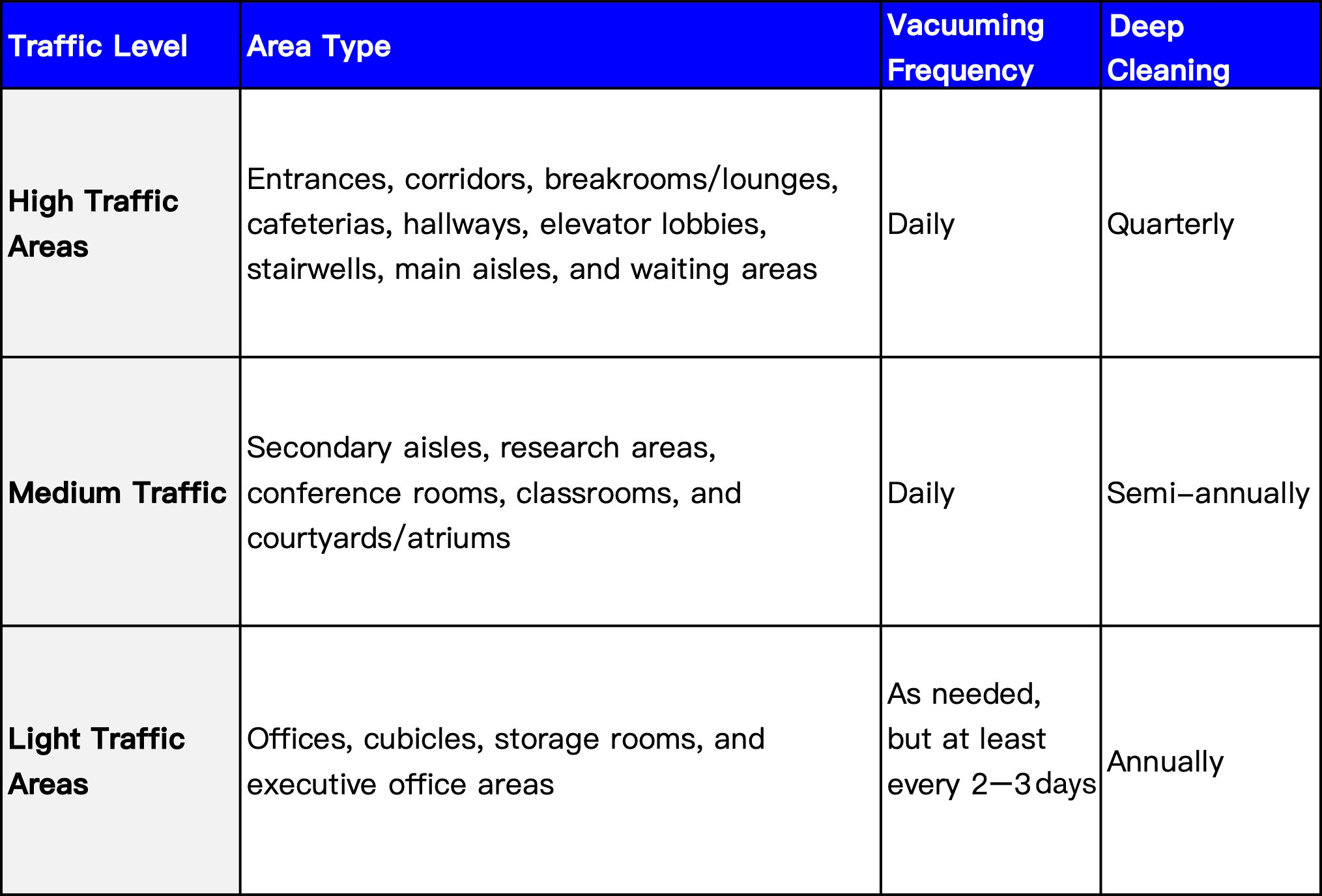
Recommended Cleaning Frequencies
Depending on the foot traffic of different areas, we recommend the following maintenance schedule:
Refreshing Both Aesthetics and Well-being
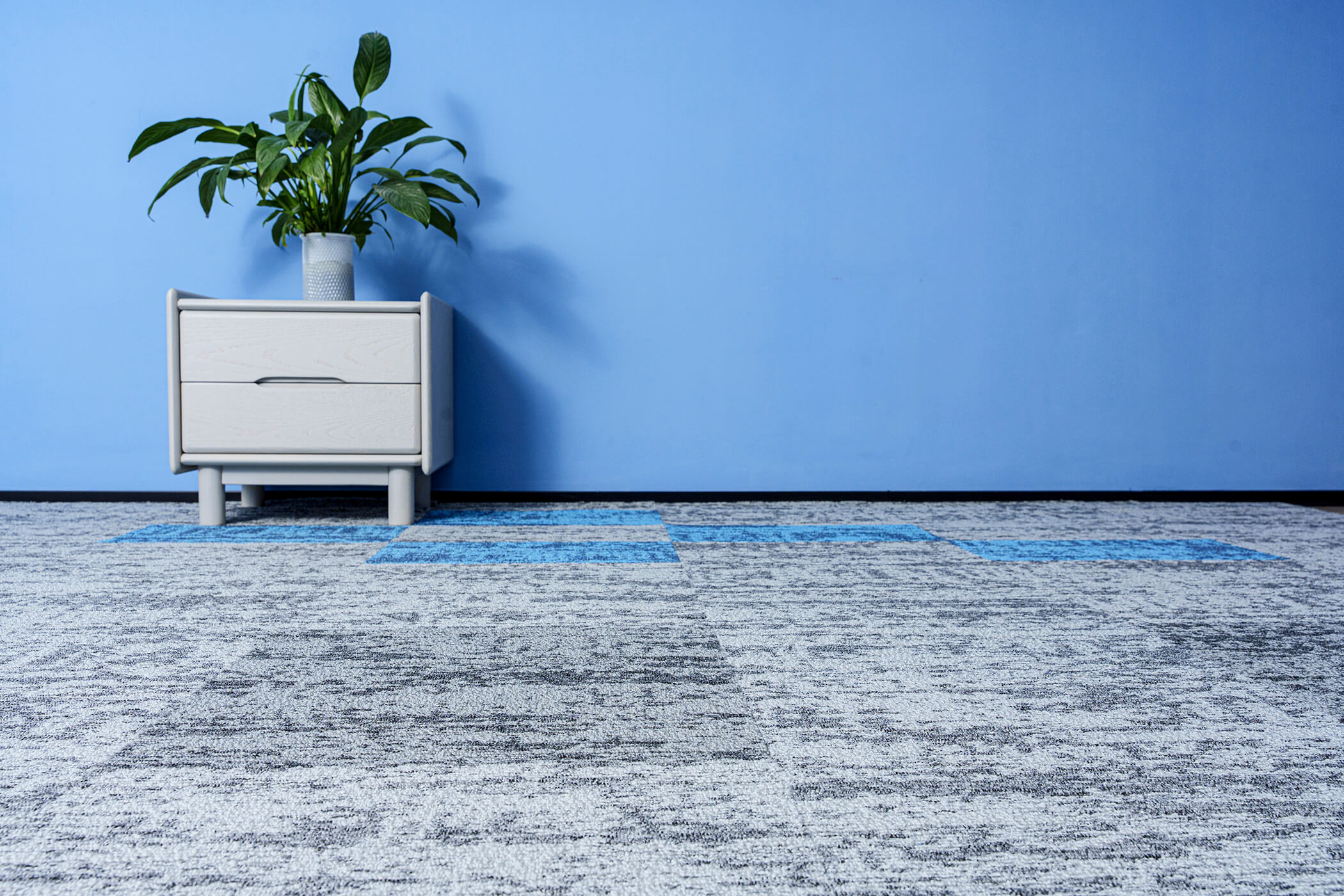
Beyond cleanliness, subtle visual updates to your flooring can also significantly enhance spatial comfort. Choosing carpets with varied tones, textures, and layouts allows you to evoke distinct seasonal moods. Furthermore, should an area suffer severe damage or an indelible stain, the true value of modular carpet tiles shines through—you can seamlessly replace only the affected tiles, preserving the space's aesthetic integrity and hygiene at a minimal cost.
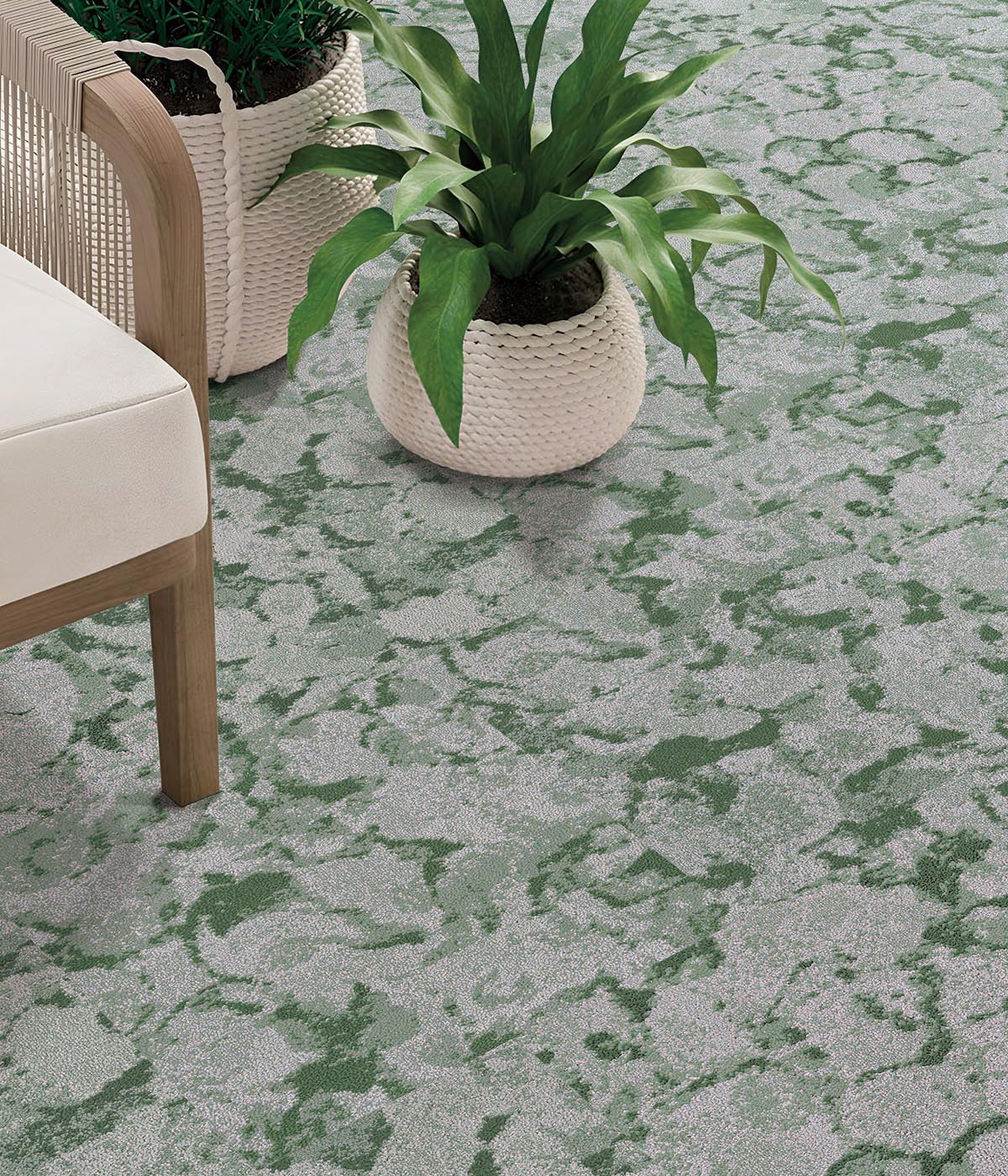
We believe exceptional flooring is the foundation of workplace well-being. Through relentless innovation and thoughtful design, we curate clean, vibrant environments where inspiring aesthetics and human health coexist in perfect harmony.
To learn more about carpet care, please click here to view the Tuntex Carpet Tile Cleaning and Maintenance Manual.